Easy read and translate

Balance activities
Balance is important for your child's body, supporting stability, coordination and preventing injury. It helps your child to complete everyday tasks, like walking, climbing and playing, while supporting their posture and strengthening their joints.
Explore the topics on this page:
Static balance
Static balance involves your child's ability to hold a steady balance while still, or stationary.
Examples of static balance
Standing on one leg
Ask your child to stand on one leg by bending the other leg and count how long they can balance before dropping their raised leg.
You could count and keep a record to make it more fun and see any progress. The activity can be progressed by adding other tasks like:
- throwing and catching a ball on one leg
- standing on one leg with eyes closed
- while on one leg, bending and picking something up from the floor
- passing a ball around the body
- standing on a wobbly, uneven surface while on one leg, for example, a cushion or a hot water bottle filled with cold water
Resistance statues
1. Four-point kneeling
Ask your child to kneel down onto all fours, with hands palm down on the floor. Make sure their arms, hips and knees are at a 90-degree angle.
Once in position, encourage your child to resist when you gently try to push them over, by telling them to plant their knees and hands and tense their muscles.
2. High kneeling
Ask your child to kneel down with their shins against the floor, but keeping their upper body upright.
Once in position, encourage your child to resist when you gently try to push them over by telling them to tense their muscles.
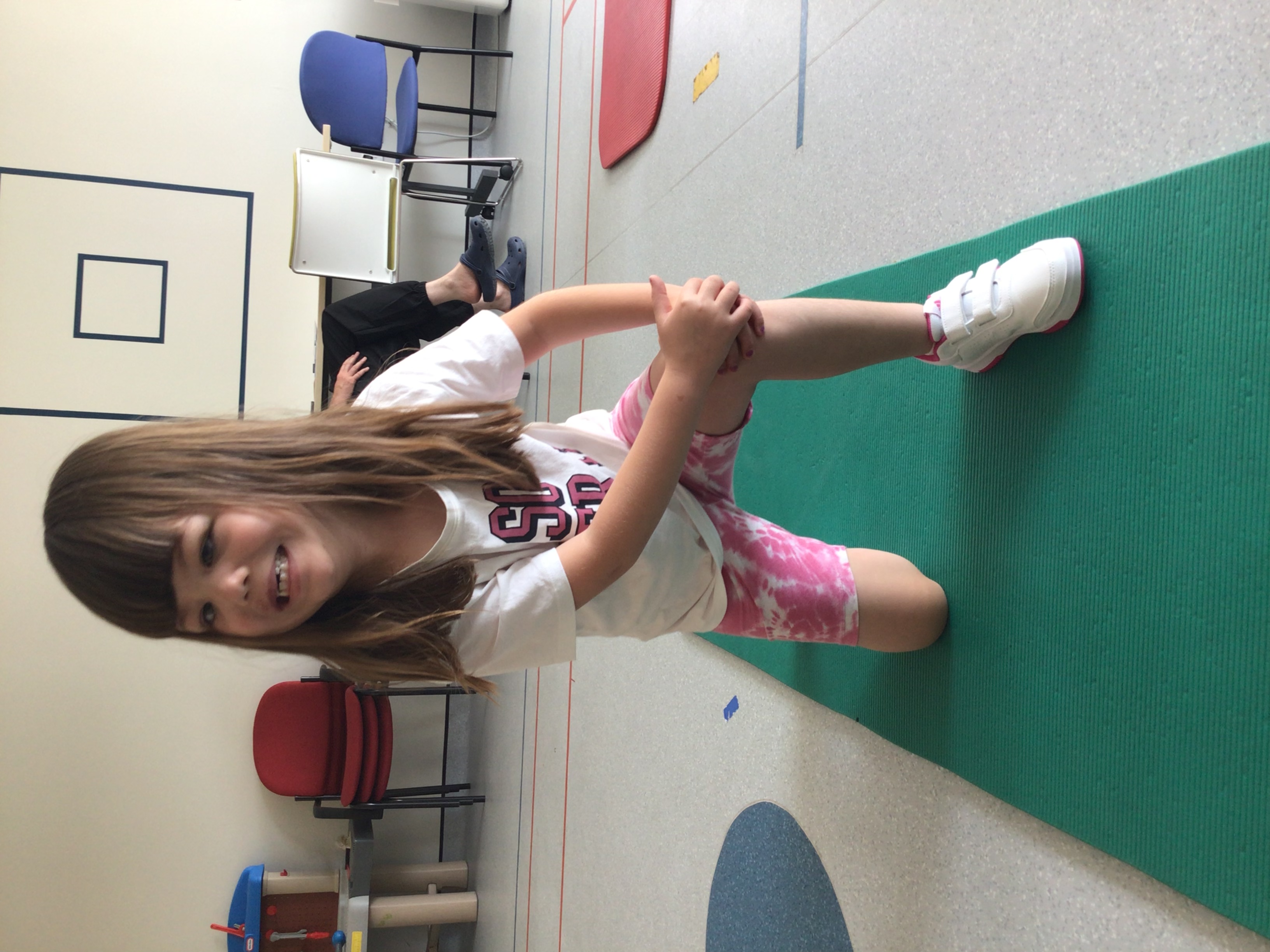
3. Half high kneeling
Ask your child to kneel down with one leg positioned with their shin against the floor, while the other leg is bent in front of them, with their foot on the floor.
Once in position, encourage your child to resist when you gently try to push them over by telling them to tense their muscles. Repeat the activity after switching their legs around.
4. Step up
Using a step, encourage your child to place one foot on the step, with their other foot positioned on the ground.
Once in position, encourage your child to resist when you gently try to push them over by telling them to tense their muscles. Repeat the activity after switching their legs around.
5. Tandem standing
Encourage your child to stand with one foot in front of the other on a line.
Once in position, encourage your child to resist when you gently try to push them over by telling them to tense their muscles. Repeat the activity after changing the leading leg for the other.
Dynamic balance
Dynamic balance involves your child's ability to balance during movement, or when they are mobile.
Examples of dynamic balance
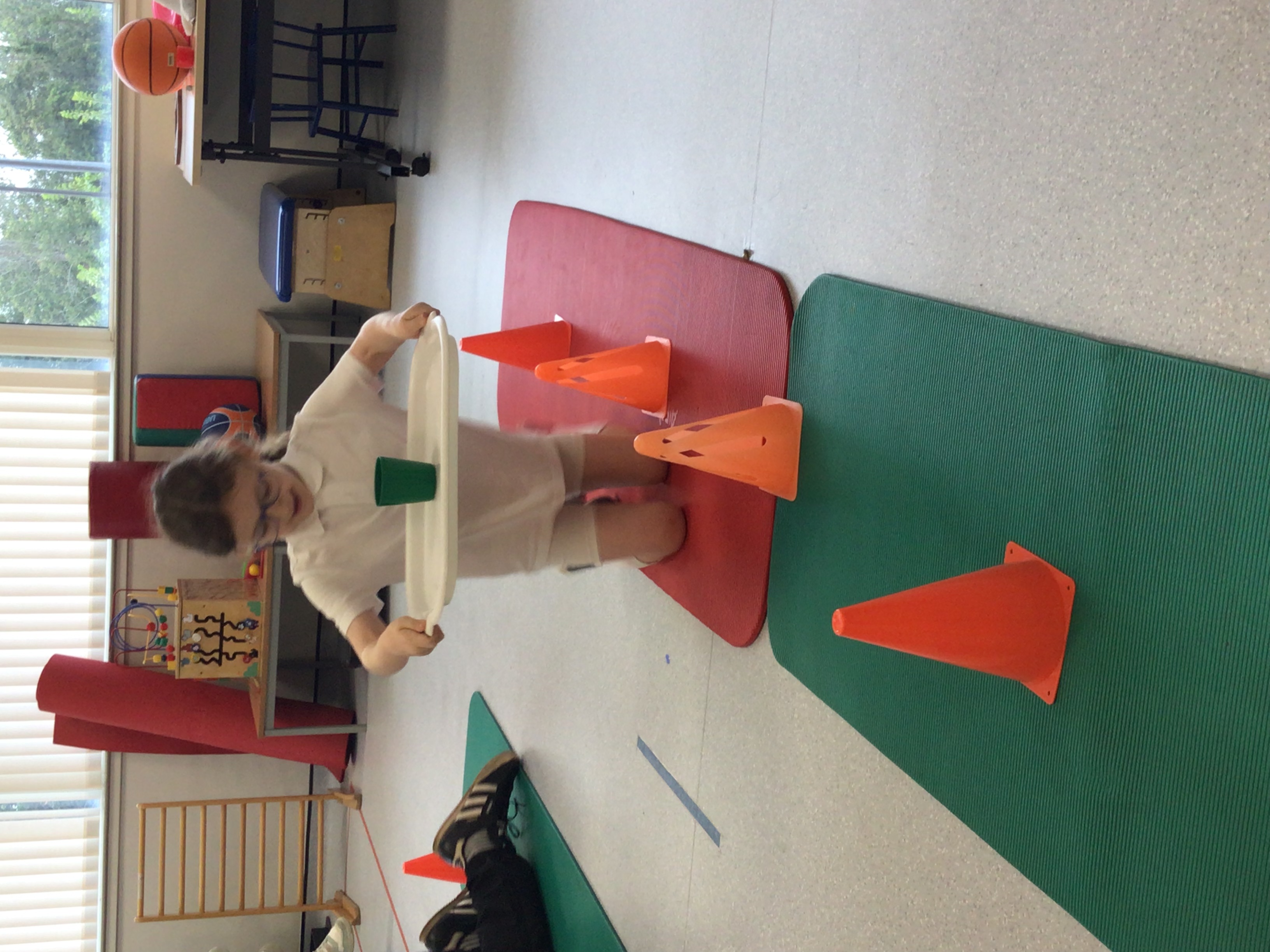
Obstacle courses
Encourage your child to build an obstacle course that encourages them to:
- crawl through tunnels (use chairs for them to crawl under)
- step over obstacles (use books and toys)
- leap on cushions
- walk along a line or raised beam
Musical statues
Ask your child to move around the room to music, dancing, hopping or jumping to make it fun. When the music stops, they should stop and stay as still as they can in that position.

Beanbag balance
Place a beanbag or soft toy on top of your child's head. Encourage them to walk in a straight line, balancing the toy on their head.
To make it more challenging, you could create a small obstacle course for them to move over while balancing the object on their head.
Stepping stones
Using cushions, mats or marks on the floor, ask your child to step from one surface to another with out falling in the 'water'.
Walking along a line
Find a line on the floor, or draw a line with chalk and ask your child to walk along it without falling off. Ask them to walk heel to toe, with one foot in front of the other.
To make the activity more challenging, they could try a higher surface, such as a bench or a beam. Always be there to support them and make sure the higher surfaces are suitable and safe.