Easy read and translate

Pilates
Pilates method is a mind-body centering technique. It emphasises the importance of beginning movement from a central core of stability. On this page you will discover the key elements of pilates. These should be practised whilst completing pilates style exercises.
Explore the topics on this page:
Key elements of pilates
1. Breathing
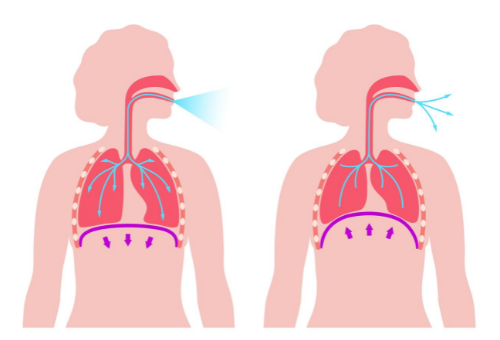
Breathing is a very important part of pilates and it helps to deliver oxygen to the muscles being used. Breathe in, filling your lungs until they feel full, imagine your rib cage expanding. Exhale the air back out through the mouth.
2. Centering
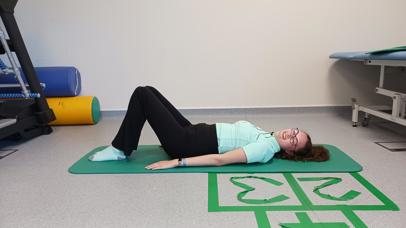
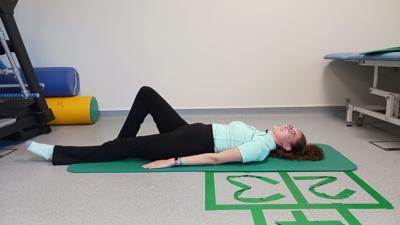
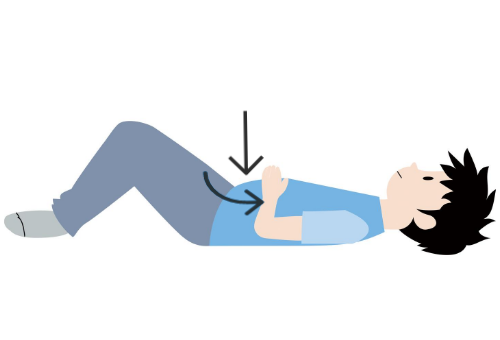
Centering means engaging the deep abdominal back muscles and pelvic floor together. This helps to keep the lower back in a neutral position. You can practice this whilst lying on your back with your knees bent. Slowly draw the stomach muscles in, as if pulling your stomach away from the line of your trousers. The aim is to continue breathing whilst engaging these stomach muscles.
3. Pelvic position
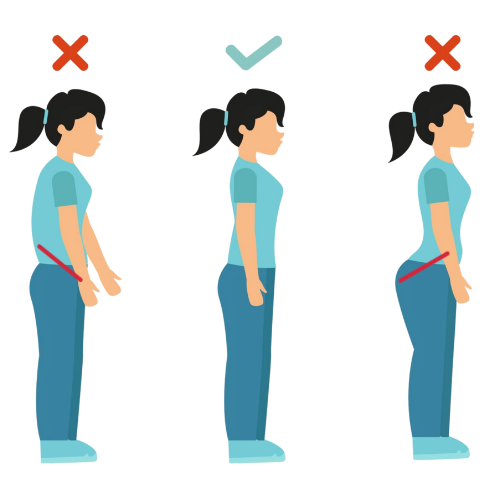
Pilates involves having your pelvis in its middle (or neutral) position. You can practice this by rocking your pelvis backwards as far as possible, tucking your tail bone in. Then rock your pelvis forwards as far as possible, sticking your tail bone out. You can then find your neutral position by finding the middle of this range.
4. Rib position
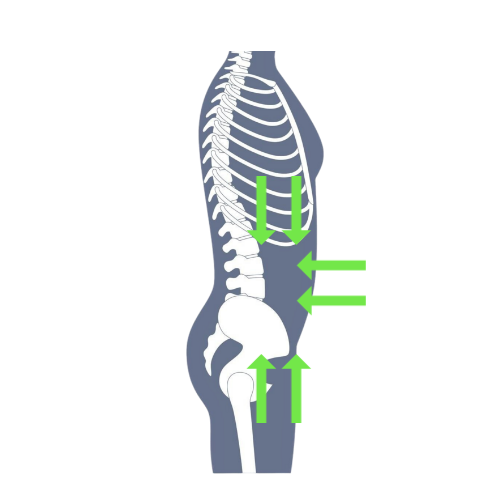
Ribs should be pulled down towards your pelvis to encourage core engagement. It can help to imagine a spring connecting the bottom of the ribcage to your hip bones.
5. Shoulder placement
Shoulder blades should be subtly pulled downward and inwards. This helps to create good stability. This encourages your shoulders to relax and ensures there is a good sized gap between your shoulders and head. 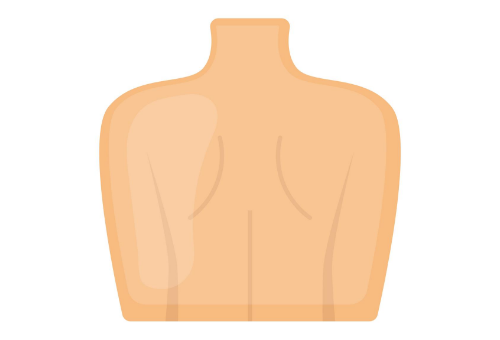
6. Head and neck position
Often people's heads poke forwards. To encourage a long neutral neck position, imagine gently pulling a piece of string on the crown of your head. This will help lengthen your neck. Some people find it helpful to imagine their head is a helium balloon, gently floating upwards.